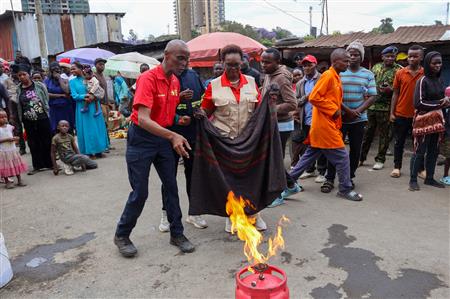
In the four years that Africa Fire Mission has run the Mathare project, fire incidents have reduced from a monthly occurrence of 20 to an average of five
Africa Fire Mission, a Rotary Community Corp of the Rotary Club of Nairobi North, showcased its work in reducing the incidence of fire outbreaks in Mathare area, Nairobi, during the District Governor’s visit to the Nairobi West Cluster.
The Nairobi West Cluster, comprising the Rotary Clubs of Nairobi North, Aqua, Karura and Gachie, selected the Africa Fire Mission’s Mathare project site to illustrate the work that Rotarians are doing in the community. Mathare area has over 100 tightly knit villages, with nearly 300 residents each and an extremely high risk of fire damage.
The project involves building Mathare residents’ capacity and resilience by arming them with practical information and skills on domestic fire response, addressing gender-based violence (GBV) issues that lead to fire incidence through psychosocial support, and strengthening community relationships with the county fire brigade.
It also covers performing fire drills that reach at least 200 people daily, training community fire champions, and equipping them with suitable protective gear. Africa Fire Mission also trains and equips county fire teams across Kenya and takes the education lessons to schools and residential estates.
During the visit, the DG and representatives of the cluster clubs and the district were exposed to foundational domestic fire response tactics, with DG Wairimu gaining firsthand experience in putting out a malfunctioning 6 kg gas flame.
District Governor Wairimu Njage commended the work, stating that it also represented peacebuilding and conflict resolution, by reducing gender-based violence.
According to Rotarian Jose Njuki, who also serves as the New Generations Director and alternate Sergeant-at-Arms at the Rotary Club of Nairobi North, in the four years that Africa Fire Mission has run the Mathare project, fire incidents have reduced from a monthly occurrence of 20 to an average of five.